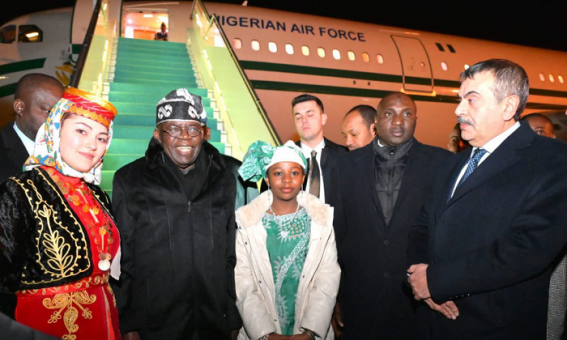
Nigeria-Turkey Diplomacy: High-Level Talks and Economic Growth Take Centre Stage
In a significant diplomatic move poised to redefine bilateral relations, President Bola Ahmed Tinubu embarked on a crucial state visit to the Republic of Turkey. This high-level engagement, happening as a landmark
state visit today, marks a pivotal moment in the ongoing efforts to deepen cooperation across various sectors, from security and education to finance and trade. Building on the momentum of Turkish President Recep Tayyip Erdoğan's official trip to Nigeria in October 2021, this visit is meticulously designed to consolidate diplomatic ties and unlock new avenues for mutual growth and development between Abuja and Ankara.
The convergence of Nigerian and Turkish leadership underscores a shared commitment to fostering a robust partnership that extends beyond traditional diplomatic exchanges. The agenda is rich with potential, promising not only political and diplomatic talks but also concrete agreements and a dedicated platform for economic collaboration. As the world watches, this initiative highlights Nigeria's proactive foreign policy under President Tinubu, seeking strategic alliances that can accelerate national development and enhance regional stability.
A New Chapter in Bilateral Relations: The Significance of This State Visit Today
President Tinubu's journey to Turkey signifies more than just a routine diplomatic engagement; it represents a strategic investment in a long-term partnership with a key emerging global player. Turkey, with its dynamic economy and strategic geographical position bridging Europe and Asia, offers Nigeria a wealth of opportunities for collaboration. Conversely, Nigeria, Africa's most populous nation and largest economy, presents Turkey with an expansive market and a vital gateway to the African continent. This synergy forms the bedrock of the enhanced relationship.
The decision to embark on this
state visit today reflects a deliberate strategy to actualize the potential identified during President Erdoğan's visit to Nigeria in 2021. That initial contact laid the groundwork, and now, President Tinubu's visit aims to elevate these discussions into tangible actions. Senior officials from both governments are expected to engage in intense deliberations, culminating in the signing of several Memoranda of Understanding (MoUs). These agreements are anticipated to span critical areas such as scientific research, energy development, technical cooperation, media and communications, and even military collaboration. Such comprehensive engagement points to a holistic approach to strengthening ties, addressing both immediate needs and long-term strategic interests. For businesses and investors, understanding the depth of these government-to-government commitments provides a crucial framework for future ventures.
Forging Economic Bonds: Trade, Investment, and Innovation at the Forefront
At the heart of the Nigeria-Turkey
state visit today are high-level political and diplomatic talks explicitly focused on shared priorities in finance, communications, trade, and investment. These discussions are not merely symbolic; they are designed to pave the way for increased economic exchange and prosperity. A cornerstone of this economic thrust is the Nigeria-Turkey business forum, convened on the sidelines of the state visit. This forum serves as a vital meeting point, bringing together investors, entrepreneurs, and business leaders from both nations to explore concrete opportunities for expanded trade and mutual economic growth.
For businesses looking to capitalize on this diplomatic momentum, the forum presents an invaluable opportunity. It's a chance to:
- Identify Niche Markets: Explore sectors like agriculture, textiles, construction, and renewable energy where both countries possess complementary strengths. Turkey's expertise in infrastructure development and manufacturing can significantly benefit Nigeria's industrialization drive.
- Seek Investment Opportunities: Nigerian businesses can attract Turkish capital and technological know-how, while Turkish firms can tap into Nigeria's vast consumer market and natural resources.
- Build Strategic Partnerships: The forum facilitates direct networking, fostering joint ventures and collaborations that can leverage the strengths of both economies.
Beyond traditional trade, there's a growing emphasis on innovation. Inspired by global trends seen in other state visits focusing on digital infrastructure and emerging technologies, this Nigeria-Turkey engagement is expected to touch upon collaborative projects in areas like telecommunications infrastructure, digital transformation initiatives, and even the exploration of critical minerals processing. Such forward-looking discussions are essential for building resilient, future-proof economies. Nigerian businesses should prepare by researching Turkish market entry strategies, understanding regulatory frameworks, and identifying potential Turkish partners with shared vision. For more details on the economic implications, consider reading
Tinubu's Turkey Trip: Unlocking New Trade & Security Opportunities.
Beyond Economics: Strengthening Security and Social Development
While economic ties are paramount, the scope of this
state visit today extends to crucial areas of security and social development, recognizing that true progress is multi-faceted. Security cooperation, a particularly vital area for Nigeria given its ongoing challenges, is expected to receive significant attention. The planned military collaboration MoU indicates a desire for deeper engagement, potentially encompassing joint training exercises, intelligence sharing, and technology transfer in defence. This partnership can bolster Nigeria's capacity to address internal security threats and contribute to regional stability.
Furthermore, cooperation in education, social development, and aviation signifies a commitment to comprehensive national advancement. Turkish educational institutions are renowned, and collaboration here could involve student exchange programs, faculty training, and curriculum development. In social development, sharing best practices in areas like women empowerment, youth development, and social welfare programs can yield significant benefits. The aviation sector also holds potential for partnerships in infrastructure development, airline operations, and maintenance. These non-economic collaborations are instrumental in fostering enduring friendship and mutual understanding between the peoples of both nations.
The High-Level Delegation: A Powerhouse of Expertise
The composition of the Nigerian delegation accompanying President Tinubu speaks volumes about the multi-sectoral focus of this
state visit today. It's a strategic assembly of key ministerial and advisory figures, each bringing specialized expertise to the table:
- Minister of Foreign Affairs, Yusuf Tuggar: Steering the diplomatic core of the visit, ensuring smooth negotiations and long-term diplomatic strategy.
- Attorney General of the Federation and Minister of Justice, Lateef Fagbemi, SAN: Crucial for ensuring all agreements and MoUs are legally sound and beneficial for Nigeria.
- Minister of Defence, General Christopher Musa (rtd); and Chairman of the House Committee on Defence, Jimi Benson: Spearheading discussions on military collaboration and security partnerships.
- Minister of Women Affairs and Social Development, Hajiya Suleiman-Ibrahim: Focusing on initiatives related to social welfare, gender equality, and community development.
- Minister of Interior, Olubunmi Tunji-Ojo: Potentially engaging on issues related to internal security, immigration, and civil defence cooperation.
- Minister of Culture and Creative Economy, Hannatu Musawa: Exploring avenues for cultural exchange, tourism, and collaboration in the arts and entertainment industries.
- National Security Adviser, Malam Nuhu Ribadu; and Director-General of the National Intelligence Agency, Mohammed Mohammed: Providing critical insights and guiding discussions on intelligence sharing and national security strategies.
This diverse delegation underscores Nigeria's holistic approach to international relations, aiming to harness Turkish expertise across a broad spectrum of governance and development.
Leveraging Global Trends: Lessons for Nigeria-Turkey Collaboration
The context of international diplomacy is constantly evolving. Modern state visits, like the Nigeria-Turkey
state visit today, are increasingly shaped by global trends focused on innovation, sustainable development, and strategic partnerships that offer alternatives to established power blocs. We've seen, for instance, how other nations prioritize collaborations around digital infrastructure, artificial intelligence, cybersecurity, and critical minerals—all designed to build economic resilience and secure future competitiveness.
Nigeria and Turkey are well-positioned to integrate these global lessons into their burgeoning partnership. For instance, rather than simply discussing trade, the focus can shift to value addition within critical supply chains, particularly in sectors where both countries have comparative advantages. Encouraging joint research and development initiatives, establishing technology transfer frameworks, and fostering innovation hubs could unlock significant potential. This means actively seeking partnerships that go beyond raw material exports, focusing instead on processing, manufacturing, and intellectual property development. Businesses should look for opportunities to engage in these higher-value activities, ensuring that the economic gains are sustainable and beneficial for both populations. Further insights into strengthening these ties can be found in
Tinubu's Turkey State Visit: Strengthening Nigeria-Turkey Ties.
Conclusion
President Bola Tinubu's state visit to Turkey marks a powerful affirmation of the deepening ties between Nigeria and Turkey. This significant diplomatic event, happening as a landmark
state visit today, is set to solidify existing relationships and forge new pathways for cooperation across critical sectors. From enhanced security collaboration and cultural exchange to significant advancements in trade, investment, and innovation, the outcomes of these high-level talks are expected to yield substantial benefits for both nations. As the agreements are signed and the business forum concludes, the stage will be set for a new era of strategic partnership, promising mutual economic growth, increased security, and robust social development for the citizens of Nigeria and Turkey. The success of this visit will undoubtedly serve as a testament to the power of proactive diplomacy in fostering a more interconnected and prosperous global landscape.